
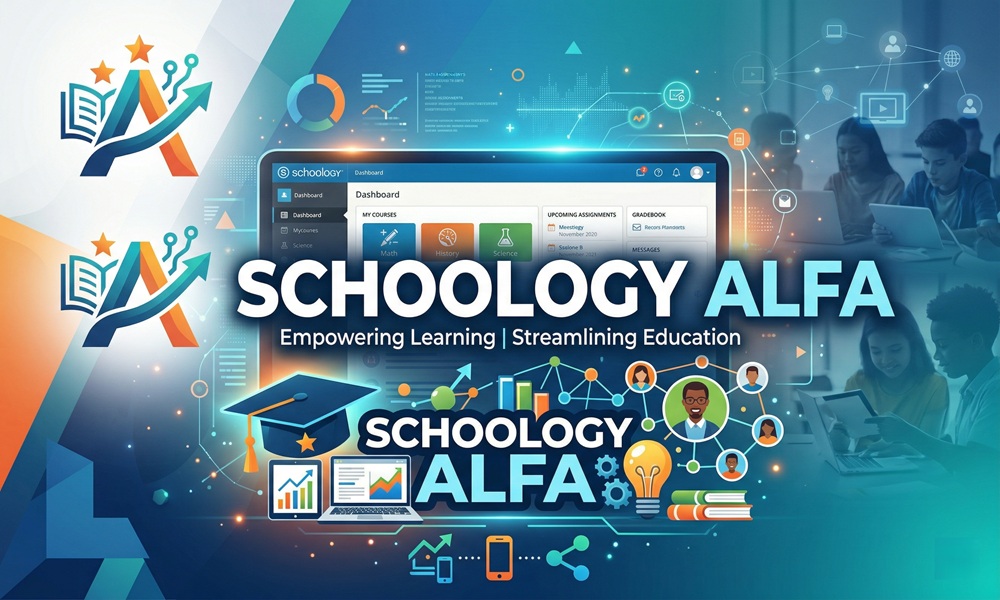
Education has fundamentally changed. What once required a physical classroom, printed worksheets, and manual gradebooks now lives entirely in the cloud — accessible from any device, at any time. At the center of this transformation is Schoology Alfa, a next-generation learning management system (LMS) that is redefining how schools teach, students learn, and parents stay connected.
Whether you are an educator looking to streamline your workflow, a student trying to stay on top of deadlines, or a parent wanting real-time visibility into your child’s academic journey, this guide covers everything you need to know.
What Is Schoology Alfa?
Schoology Alfa is an enhanced version of the well-known learning management system Schoology, designed to expand the capabilities of traditional LMS platforms by offering smarter tools, deeper analytics, and more personalized learning paths for students and teachers alike.
While Schoology has been widely used for over a decade, the Alfa version signifies a major evolution — focusing more on adaptability, personalization, and data-driven insights. Unlike traditional LMS platforms that only act as content repositories, Schoology Alfa brings a dynamic, AI-augmented environment that supports real-time engagement, intuitive course management, and a deeply integrated communication system.
At its core, Alfa Schoology is a customized version of the widely used Schoology LMS. While the standard platform provides essential tools for online learning, the Alfa version often includes enhancements tailored to specific school needs, like improved dashboards, additional collaboration features, and better reporting tools.
In practical terms, it functions as a centralized digital classroom — one place for lessons, assignments, grades, discussions, communication, and performance tracking.
How Schoology Alfa Works
Schoology Alfa works through web browsers and mobile devices, which allows learning to continue outside the classroom. For students, the platform acts like a personal learning dashboard. When students log in, they can see their courses, assignments, announcements, and grades in one place.
The platform follows a straightforward operational flow:
- Institution Setup — Schools or districts deploy and configure the platform to match their curriculum.
- Role-Based Access — Teachers, students, administrators, and parents each receive tailored dashboards.
- Course Management — Teachers build courses with lessons, multimedia, and assignments.
- Student Engagement — Students submit work, participate in discussions, and track grades.
- Analytics & Feedback — Administrators and teachers review performance data and adjust strategies.
- Parent Visibility — Parents log in to monitor progress, grades, and upcoming deadlines.
Key Features of Schoology Alfa
Schoology Alfa offers enhanced dashboard customization, advanced assignment tracking, and deeper integration with educational tools, making it a preferred choice for modern educational environments.
Centralized Learning Dashboard
The interface is clean, simple, and intuitive. Even first-time users can navigate the platform without training. This ease of use encourages regular engagement and reduces frustration. Teachers, students, and parents all get role-specific views — showing only what’s most relevant to them.
AI-Powered Personalization
Schoology Alfa uses intelligent algorithms to personalize learning for each student. By analyzing performance data, the platform adjusts the course material, pacing, and difficulty to better suit individual learning styles.
Advanced Analytics
Alfa provides real-time data on student engagement, grades, and performance trends, helping teachers identify students who need support. AI helps with grading routine tasks, allowing teachers to focus more on meaningful feedback and mentoring.
Communication Tools
Real-Time Chat and Messaging enables instant feedback and peer-to-peer collaboration. Integrated Video Conferencing seamlessly supports hybrid or remote learning environments. Discussion Boards promote critical thinking and community-based learning. Parent Access Portals keep guardians engaged with their child’s progress and classroom activities.
Mobile Accessibility & Offline Mode
Whether someone is learning at home, in class, or on the go, Schoology Alfa works smoothly on phones, tablets, laptops, and even with spotty internet, thanks to offline viewing.
Third-Party Integrations
Platforms like Google Drive, Dropbox, Zoom, Microsoft Teams, and more can be integrated seamlessly. This open ecosystem means schools don’t need to abandon existing tools — Schoology Alfa works alongside them.
Feature Overview at a Glance
| Feature | Description | Who Benefits Most |
|---|---|---|
| Unified Dashboard | Centralized access to courses, grades, and deadlines | Students, Teachers |
| AI Personalization | Adaptive content based on performance data | Students |
| Advanced Analytics | Real-time tracking of engagement and progress | Teachers, Admins |
| Parent Portal | Grade and assignment visibility for guardians | Parents |
| Mobile App | iOS & Android with offline support | Students, Teachers |
| Discussion Boards | Collaborative learning spaces | Students, Teachers |
| Video Conferencing | Built-in support for live/hybrid classes | Teachers, Students |
| Third-Party Integrations | Google Drive, Zoom, Microsoft 365, Dropbox | All Users |
| Gamification | Badges, points, and progress milestones | Students |
| Data Security | Multi-factor auth, end-to-end encryption | All Users |
Who Uses Schoology Alfa? Role-by-Role Breakdown
Alfa Schoology is used by a wide range of users — students, teachers, administrators, and sometimes parents. Each role has access to different tools and permissions.
For Students
For students, it acts as a personal learning space. They can view lessons, submit homework, take quizzes, and check grades in one place. Notifications and calendars remind them of deadlines, which improves time management and reduces last-minute stress.
One reported outcome: one student shared that they completed 30% more assignments just because reminders kept them on track.
For Teachers
Teachers can design courses, assign work, and track student progress. Features like automated grading, centralized lesson storage, and analytics help them spend more time on teaching rather than administrative tasks.
The time savings are significant — many schools say teachers saved 35–40% of their administrative time after switching.
For Parents
Parents can view grades, assignments, and updates through linked accounts. This transparency eliminates the need to chase teachers for updates and creates a more involved home-school partnership.
For Administrators
Administrators can monitor academic activity and manage digital learning systems across the school. System-wide reports allow data-driven decisions about curriculum, staffing, and resource allocation.
Benefits of Using Schoology Alfa
Students gain access to a flexible learning environment that supports multimedia lessons, interactive quizzes, and collaborative projects. Schools also benefit from streamlined communication between teachers, students, and parents, reducing misunderstandings and administrative overhead.
Here is a summary of key benefits by stakeholder:
| Stakeholder | Primary Benefits |
|---|---|
| Students | Flexible learning, organized deadlines, real-time feedback |
| Teachers | Automated grading, time savings, performance insights |
| Parents | Grade visibility, direct communication, attendance tracking |
| Schools/Admins | Scalability, compliance reporting, centralized management |
For schools, Alfa Schoology promotes scalability, making it suitable for K-12, higher education, and even professional training programs.
Schoology Alfa vs. Other LMS Platforms
How does it stack up against the competition?
| Platform | Best For | Ease of Use | AI Features | Parent Access | Mobile Support |
|---|---|---|---|---|---|
| Schoology Alfa | K-12 & Higher Ed | ⭐⭐⭐⭐⭐ | ✅ Yes | ✅ Yes | ✅ Excellent |
| Google Classroom | Simple workflows | ⭐⭐⭐⭐ | Limited | Limited | ✅ Good |
| Canvas | Higher education | ⭐⭐⭐ | Moderate | Limited | ✅ Good |
| Moodle | Technical institutions | ⭐⭐ | Limited | No | Moderate |
| Blackboard | Enterprise/University | ⭐⭐⭐ | Moderate | No | ✅ Good |
Google Classroom is simple, but Schoology Alfa offers more for full-time classes. Canvas is great for universities, but younger students often find it overwhelming — Schoology Alfa is cleaner and easier to navigate. Moodle is free and flexible, but setup can be confusing; Schoology Alfa is ready to use right away.
Challenges and Limitations to Know
No platform is perfect. Being informed about the limitations helps schools make smarter implementation decisions.
New users may face a learning curve, especially if they are not familiar with digital platforms. Students and teachers need time to adjust to navigating dashboards, creating content, and managing notifications effectively.
Another challenge is its dependency on a stable internet connection. Offline access is limited, meaning students in areas with poor connectivity may struggle to participate fully.
Additional challenges include:
- Notification overload — Without proper settings management, alerts can become overwhelming
- Privacy governance — Schools must ensure local data compliance requirements are met
- Resistance to change — Educators accustomed to traditional methods may require additional training time
- Pricing transparency — Subscription costs are not always publicly advertised; institutions must contact providers directly
Institutions needing robust technical clarity, extensive customization, or verified enterprise-scale performance may prefer more established systems.
Best Practices for Implementation
Getting the most out of Schoology Alfa requires thoughtful rollout. Here are proven strategies based on how schools have successfully adopted the platform:
For Schools and Administrators:
- Train teachers thoroughly before the launch date
- Begin with a pilot program in select classrooms before full deployment
- Establish clear notification and communication policies from day one
- Ensure data compliance with local and national regulations
For Teachers:
- Plan lessons ahead using the course creation tools to organize content before the term starts.
- Create discussion boards or group projects to make learning more engaging, and utilize analytics to monitor student progress and identify those who need extra help.
For Students:
- Check your dashboard daily for updates on assignments and announcements. Engage in discussions to clarify doubts and learn from peers. Review grades and teacher feedback regularly to improve performance.
The Future of Schoology Alfa
Coming developments include even smarter AI with more personal recommendations and early warnings for struggling students, skill badges for coding, STEM, and project-based learning, stronger hybrid support with better global access and faster loading times, expanded language options useful for international or multilingual classrooms, and career-focused tools to help students build future-ready skills.
The trajectory is clear: Schoology Alfa is evolving from a classroom management tool into a comprehensive learning intelligence platform — one that doesn’t just deliver content but actively helps every student succeed.
Frequently Asked Questions
Q: Is Schoology Alfa free for students? Some institutions provide Schoology Alfa at no cost to students, while others may require a subscription. Cost typically depends on the school or district’s licensing agreement.
Q: Does it support hybrid learning? Yes, it supports online, hybrid, and blended learning environments with tools like video conferencing and digital assignments.
Q: How secure is student data on the platform? Schoology Alfa uses encryption and secure login systems to protect user data, ensuring a safe learning environment. Multi-factor authentication and role-based access further strengthen data protection.
Q: Can parents track their child’s progress? Yes, parents can view grades, assignments, and updates through linked accounts.
Q: What devices are compatible? The platform supports web browsers on desktops and laptops, as well as dedicated iOS and Android mobile apps — with limited offline functionality for on-the-go access.